From a stroke at 28 to skiing solo to the South Pole
Stroke doesn't have to dictate our future, says a man who has taken that mindset to the furthest extremes… literally to the ends of the Earth.
At Bristol After Stroke, we witness daily the determination and courage of people who have refused to be defined by their medical condition. Here, we meet a man who has taken that mindset to the furthest extremes… literally to the ends of the Earth.
In 2014, Jonny Huntington was just 28, a keen sportsman and a British Army officer. One day, when he was working out in the gym, a blood-vessel rupture in the right motor cortex caused his left side to shut down from the neck down.
The stroke left him completely paralysed down one side of his body.
Over two and a half years of gruelling rehabilitation in a military hospital followed, leaving him partly recovered - but still walking with a pronounced limp. While his cognitive processes had escaped undamaged, he now faced the prospect of being discharged from the career he had set his heart on because he could no longer perform his military role.
But despite that setback, he is quick to find the positives in his experience. “I was lucky,” he says, “because they did help me find work in a government department.
“Then, one day, depression suddenly hit. I told my boss that I just had to go home. Looking back, it’s easy to see why: everything had happened at once. I’d lost my role, my relationship had broken down… and I had yet to come to terms with what had happened to me, and who I now was – my ‘new normal’.
“I spent a few weeks in a very dark place, even contemplating suicide… and eventually I reached out to some friends and their support helped me through.
“Luckily my employers were well used to supporting ex-service personnel through major injuries and traumas. They gave me the time to recover. And I simply approached that recovery journey one day at a time.”
Even so, Jonny’s recovery journey was only just beginning.
“After that, it took me several years to get to a stage where I was finally dealing with the new reality… recognising that - actually - you are still the same person that you were prior to your injury. My stroke hadn't affected who I was at all.
“I was still me.”
The next stage of the journey
The next stage of the recovery process for Jonny was getting his body back into the very best shape possible. He trained hard, got into the GB paralympic skiing team... and then set his sights on a challenge that would seem unthinkable for most fit people, let alone someone still limited in their mobility.
The challenge he set himself was to reach the South Pole… alone.
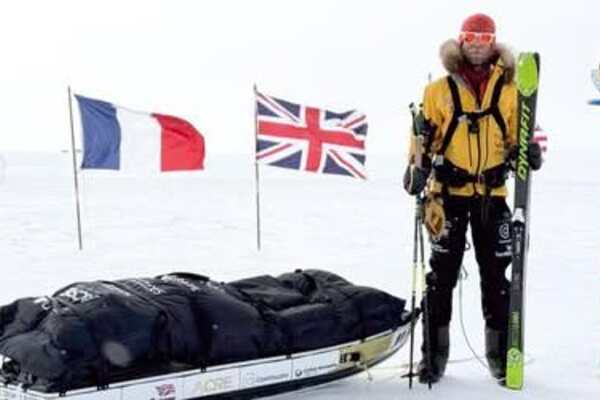
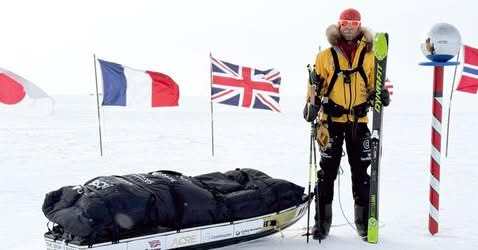
This was to be an extraordinary 911-kilometre journey across Antarctica, skiing for around 11 hours a day in temperatures as low as –40°C while hauling a sled carrying all his equipment and weighing 110 kilograms… avoiding potentially lethal crevasses along the way.
While he is not the first disabled person to ski across Antarctica to the South Pole, he became the very first to have done it alone and without any form of assistance along the way, entering into the Guiness Book of Records in the process.
“Getting to the South Pole took 45 days 20 hours and 42 minutes of skiing,” Jonny says, “but years of planning beforehand. Getting that part right was essential, and my army training really helped. It also meant raising huge sums in sponsorship. Getting back was easier - I was picked up by plane!
As he said after reaching the South Pole, “It’s been a bit of a whirlwind since getting here. It’s pretty emotional. My right leg is pretty sore, which I think is probably reasonable, because it’s done most of the work.”
So what are the key lessons he has learned from his experience that he would pass on to other people who have had a stroke?
“To me, it’s not to be defined by your injury. When you’re in the thick of it, especially in those early days of battling through rehab, it’s difficult. Break the problems down and taking it one day at a time is vital. And so too is making peace with the fact that you're not necessarily going to know what the outcome's going to be.
“Everyone's stroke is different, and no one's in a position to give you any hard and fast guarantees in terms of your recovery. These are big, very significant, very life-altering events you’re going through.
“You either work hard to try and achieve the best outcome you can, or you can let the stroke dictate your future.”
And now?
Since his monumental journey, Jonny has been sharing his experiences in motivational talks up and down the country. But he hasn’t given up taking on fresh challenges. He’s just completed the UTMB ultramarathon (100 miles) around Mont Blanc in a remarkable 44 hours.
“Next year, myself and a couple of other injured veterans are going out to the US to run 50 marathons in 50 states in 50 days. The mental health aspect to all this will also be important as all of us have had our struggles.”
He has also applied his experiences to become a sport scientist with interests in psychology, physiology and nutrition and a performance coach.
As someone who has pushed himself to his furthest limits, Jonny’s message to everyone he speaks to, not just those who have experienced a stroke, is to never let their circumstances limit their ambition: only then can you truly know what you are capable of.


