Gareth’s (half) marathon journey to recovery from stroke… through volunteering
What happens when a stroke changes the course of your life? "You are still ‘you'… just a different ‘you’," says BAS's own marathon man, Gareth Thomas.
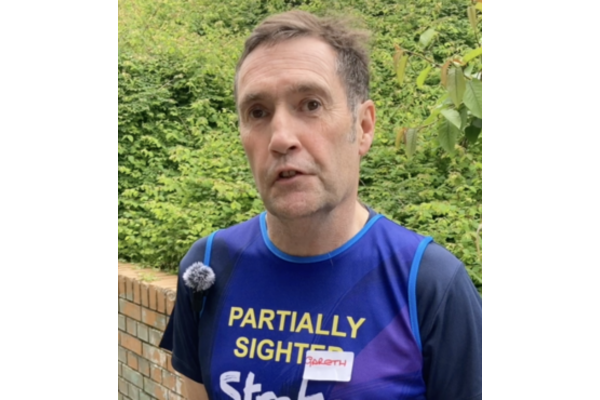
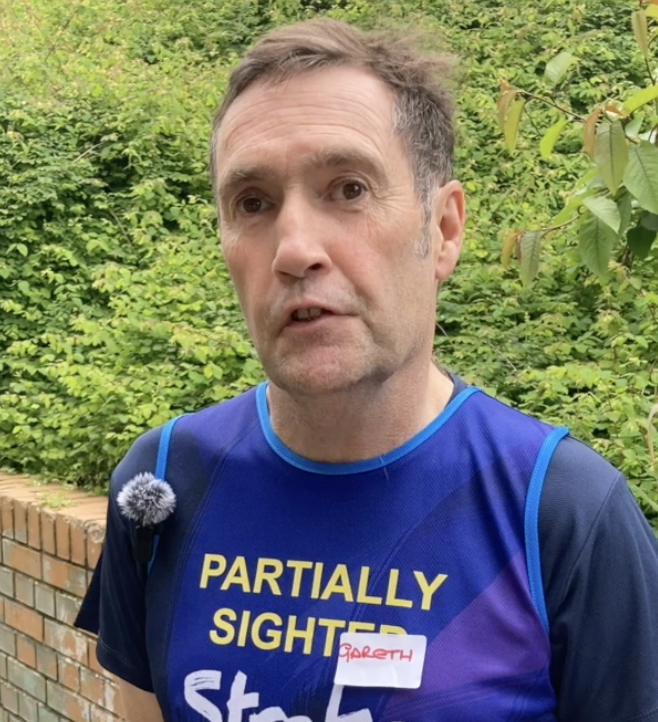
When Gareth Thomas had his stroke in 2023 at the age of 57, it not only put a halt to his job as a barber but also put on hold his long-standing love of cycling and distance running.
Three years on, while he has not been able to return to work, he has recovered sufficiently to run in two successive Great North Runs and raise money for stroke… and become one of Bristol After Stroke’s very busiest volunteers.
“Everyone’s stroke appears to be different,” he says, “and mine certainly was unusual. I felt as though I’d had a ‘factory reset’.
“The immediate physical effects were common enough – I lost the use of my arms and legs. But my cognition issues were more complex. Everything looked familiar… but new. I could recognise objects and colours but couldn’t name them.
“I also lost half of my field of vision.
“While I have recovered a lot of functionality, some problems still remain. I can write… but not read what I’ve written. Like I said, it left me with some unusual symptoms! The eyesight issue also remains.”
So how has volunteering helped in that recovery journey?
It wasn’t long after his stroke that Gareth resolved not to let his stroke hold him back… and started volunteering. First, it was at Slimbridge Wetland Centre, spurred by his longstanding love of wildlife.
And then he asked what he could do for Bristol After Stroke, the charity that played a big part in his stroke recovery journey. “They had helped my physical recovery with physiotherapy. I had also experienced some down moods and the counselling I received from them was incredibly helpful.
“I wanted to give something back. I spent a lot of my career helping people in various ways… and this was another way to do it!”
His current roster of volunteering roles is impressive. He harnesses his experiences of aphasia to advise and counsel members of Bristol After Stroke’s fortnightly Yate aphasia group. “Having a stroke makes you realise just how fast the modern world is,” he says, “and I can empathise with the challenges that many people with cognition issues face.”
In addition, he helps run one of the charity’s busiest weekly groups, at Lyde Green, as well as support the running of many of their events - such as their annual Charity Walk, Sports Day and Wellbeing Day.
And Gareth’s newest role looks like being the most fulfilling yet: he is one of five new volunteer peer mentors recently trained to harness their experience of stroke to give one-to-one support to those more recently affected.
“I know stroke has changed what I can do,” Garet says, “but I consider myself one of the lucky ones,” he says. “You are still ‘you’ after a stroke… just a different ‘you’.
“Volunteering with Bristol After Stroke has played a big part in my recovery journey. Everyone talks about regaining their sense of purpose, and that’s certainly true for me. It’s also given me a greater understanding of other people’s lives, it’s helped me to face new challenges and enabled me to continue moving forwards with my life.”


